

At Designers Choice, we know exactly what it feels like to hold a finished book in your hands. It is a moment of pride.
We have spent years working with design, helping creators turn their ideas into real products. We built this space to be the helper we always wanted.
It is where skill meets new ideas. We know it can be hard to make a vision real. You have to find the right tools and keep up with what is new.
That is why we share top products and trusted tips. We want to help you make your best work.
Our goal is to help you build your boldest dreams with a group of people who care about doing a great job just as much as you do.
When you start a project, getting the standard book cover size right is the first step. It might seem like a small detail, but it changes everything.
The size affects how the book looks on a shelf and how it feels to hold.
If you are making a cover for the first time, this guide is for you. We will talk about cover dimensions, spine width, and pixel dimensions.
We want to make sure your book cover design looks perfect, whether it is for a printed book or an e-book.
Why Knowing the Standard Book Cover Size Matters?

You might ask, “Can’t I just make my book any size I want?” technically, yes. But if you want to sell books, the correct dimensions are key.
Think about a bookstore. Books are stacked on shelves in a neat way. If your book is a strange shape, it might not fit.
It might get hidden behind other books. Using a standard book cover helps your book appear to belong with the bestsellers.
Also, printing costs change based on size. Standard sizes are cheaper to print because printers set up their machines for these common book sizes. If you pick a custom size, you might have to pay much more.
This eats into your profit.
For digital books, like on Amazon KDP, the size matters for the screen. If your cover image is the wrong shape, it might look stretched or fuzzy.
A blurry cover makes readers think the story inside is bad, too. A clear, sharp cover helps with book marketing. It grabs attention.
This is valuable real estate on a webpage. You want to use that visual space well.
Lastly, the size changes the reading experience. A book that is too heavy or wide is hard to hold. A mass market paperback fits in a back pocket. A large art book needs a table. Picking the ideal size shows you care about your potential readers.
What is the Standard Book Cover Size For Printed Books?

When we talk about printed books, we talk about “trim size.” This is the final size of the book after the pages are cut. There are three main types of printed books: Mass Market Paperbacks, Trade Paperbacks, and Hardcovers. Each has a different standard book cover size in inches.
Mass Market Paperback Dimensions
These are the small, thick books you see in grocery stores or airports. They are often fiction books, like romance or mystery.
The standard book cover size for these is usually 4.25 x 6.87 inches. They are small, making them easy to carry.
Because they are small, the text inside is smaller too. These books are meant to be cheap to buy.
The paper is not the best quality, but it gets the job done. If you are writing a quick, fun story, this might be the right choice. However, because the size is so tight, your cover design needs to be simple. You do not have much room for great details. The cover art must be bold and clear.
Trade Paperback Dimensions
Trade paperbacks are the books you find in a nice bookstore like Barnes & Noble. They are bigger and have better paper than mass market books.
This is the most common choice for self-publishing authors.
The most popular sizes are:
- 5.5 x 8.5 inches (often called Digest)
- 6 x 9 inches (also known as US Trade)
The 6×9 size is very popular. It gives a good balance. It is big enough to show off great cover art, but not too big to carry.
It feels like a “real” book. Many non-fiction and novels use this size. It provides a comfortable reading experience.
Hardcover Book Dimensions
Hardcover books are the premium option. They have a hard, sturdy cover. They often come with a paper “dust jacket” that wraps around the book.
This jacket has the front cover, spine, and back cover printed on it.
Standard sizes for hardcovers often match trade paperbacks, like 6 x 9 inches. However, they can be larger.
For example, 6.14 x 9.21 inches is common. Because of the hard board, the final size of the book will feel bigger than the paper inside.
Hardcovers are great for first-time releases of big novels or important business books. They cost more to print, but they look very professional.
Choosing the Right Standard Book Cover Size by Genre

Different kinds of stories need different sizes. Readers expect certain genres to look a certain way.
If you print a cookbook in a tiny paperback size, it will look wrong. Here is how to pick the recommended size for your different genres.
Fiction (Thriller, Romance, and Sci-Fi)
For fiction, the standard book cover size depends on how you sell it. If you want to sell cheap copies in many places, go with the mass market size (4.25 x 6.87 inches).
But most self-publishers choose trade paperback sizes.
- Romance: 5 x 8 inches or 5.5 x 8.5 inches. These are cute and easy to hold.
- Thriller and Sci-Fi: 6 x 9 inches. These stories are often longer. The larger size helps keep the book from getting too thick. A thicker spine can be hard to read.
Your cover design should match the size. Sci-Fi covers often have big space scenes. You need width to show that off. A 6 x 9 canvas gives you that room.
Non-Fiction (Business, Self-Help, and Memoirs)
Non-fiction books almost always use trade paperback dimensions.
- Business Books: 6 x 9 inches is the standard. It looks serious and fits well on office shelves.
- Memoirs: 5.5 x 8.5 inches or 5.25 x 8 inches. This feels more personal and intimate.
The 6 x 9 size is the gold standard here. It allows for nice, readable text inside. It also gives plenty of space on the back cover for testimonials and an author bio.
Children’s Books and Picture Books
Children’s books break the rules. They come in many shapes. Picture books are often square or wide (landscape).
- Square: 8.5 x 8.5 inches. This is a very common book size for kids. It is easy for small hands to hold.
- Landscape: 11 x 8.5 inches. This is wide. It is great for big illustrations that spread across two pages.
For these books, the cover image is the most important part. The cover size width and height must be big enough to make the colors pop. Parents pick these books based on the pictures.
Textbooks and Art Books
These are the biggest books.
- Textbooks: usually 7 x 10 inches or 8.5 x 11 inches. They need room for charts, graphs, and side notes.
- Art Books: often coffee table style. They can be 10 x 10 inches or even bigger.
For an art book, the best quality paper and printing are needed. You want the high resolution images to look perfect.
The large cover dimensions act like a frame for the art.
Standard Book Cover Size For Ebooks and Digital Publishing
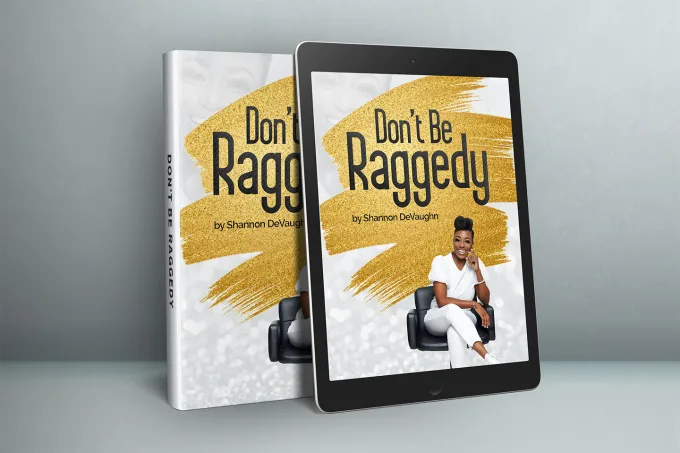
When you move to digital, you stop thinking in inches and start thinking in pixels. Book cover size in pixels is what matters for screens. Even though an e-book cover is just a file, it still needs to look like a book cover.
Amazon Kindle (KDP) Requirements
Kindle Direct Publishing (KDP) is the biggest place to sell e-books. They have strict rules.
- Ideal Dimensions: 1,600 x 2,560 pixels.
- Aspect Ratio: 1.6:1. This means for every 1000 pixels wide, it should be 1600 pixels tall.
- File Size: It should be less than 50MB (though smaller is better for downloading).
If you stick to these pixel dimensions, your cover will look crisp on every device, from a phone to a tablet.
Amazon KDP will shrink your image for the thumbnail, so make sure your title is big and easy to read even at a smaller size.
Wattpad and Other E-Reader Formats
Wattpad is huge for new writers. The vibe is different, and so is the size.
- Wattpad Cover Size: 512 x 800 pixels. This is much smaller than a Kindle.
Other platforms like Apple Books or Kobo generally accept the standard Kindle size (1600 x 2560). It is a great way to keep things simple: design one high-quality master file, and then resize it down if needed. Always design in RGB color mode for screens.
CMYK is for print books, but RGB makes colors bright on a phone.
Audiobook Cover Dimensions
Audiobooks are growing fast. Their covers are unique because they are square.
- Standard Size: 3,000 x 3,000 pixels.
- Aspect Ratio: 1:1.
You cannot just crop your rectangular book cover. You usually have to redesign it to fit the square. You have less vertical space, so you might need to move the author name or title.
How to Calculate Spine Width For A Standard Book Cover Size?
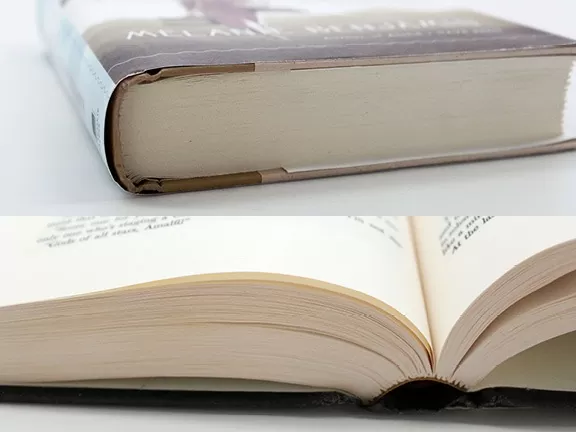
If you are making a paperback cover for print, you need a full wrap file. This includes the back cover, the spine, and the front cover all in one image. The width of your spine depends on your page count and the type of paper you use.
- Cream paper is thicker than white paper.
- White paper is thinner.
Here is the basic math: Page Count x Paper Thickness = Spine Width.
For example, if you have 300 pages and the paper is 0.002252 inches thick: 300 x 0.002252 = 0.6756 inches.
So, your spine is about 0.68 inches wide. You must add this to your cover width.
Total Width = Back Cover Width + Spine Width + Front Cover Width + Bleed. If you get this wrong, your text might slide off the spine onto the front or back. It looks messy. Most print-on-demand sites like Amazon KDP have template generators.
You type in your number of pages, and they give you a template with the correct dimensions. We strongly suggest using these.
FAQ’s:
Is There A Difference Between the US and UK Standard Book Cover Sizes?
Yes, there is. In the US, sizes are in inches. In the UK, they use A-sizes (like A5) or measure in millimeters. A standard US 6 x 9 is close to a UK “Royal” size, but not exact. If you sell in both places, check the standard book sizes for the specific market.
What Measurements Should I Use When Designing A Book Cover in Photoshop?
If you are setting up book cover size in Photoshop, first decide if it is print or digital.
- For Print: Set your width and height in inches (e.g., 6 inches wide, 9 inches tall). Set resolution to 300 DPI (Dots Per Inch). This ensures high resolution printing.
- For Ebook: Set units to pixels. Use 1600 x 2560 pixels. Resolution can be 72 DPI, but 300 DPI is safer if you want to use the art for print later.
What is the Most Common Standard Book Cover Size For Novels?
The most common book sizes for trade paperback novels are 5.5 x 8.5 inches and 6 x 9 inches. Most indie authors pick 6 x 9 because it feels substantial and offers good value.
Where Can I Find Free Book Cover Templates With Standard Sizes?
You can find template generators on KDP, IngramSpark, and other printing sites. Also, design tools like Canva have preset book cover sizes. Just be careful—sometimes preset sizes are for ebooks only. Always check the trim size for print.
Does the Standard Book Cover Size Differ For Self-Publishing?
Not really. Self-publishing platforms use the same standard sizes (like 6×9) as traditional publishers. This is good because it makes your own book cover look just as professional as one from a big company.
What Represents the Standard Dimensions For an E-book Cover?
The gold standard is 1,600 x 2,560 pixels. This is a width ratio of 1:1.6. It fits most e-readers perfectly.
How Do I Determine the Size Of A Children’s Book Cover?
Look at the word count and illustrations. If it is a picture book, go for 8.5 x 8.5 square. If it is a chapter book for older kids (more text, fewer pictures), a smaller size like 5 x 8 inches works well.
Why is the 6×9 Size So Popular?
It is the perfect middle ground. It is not too small like a mass market paperback, and not too big like a textbook.
It offers the best visual space for design and is cost-effective to print.
Conclusion
Getting the standard book cover size right is a huge part of your book’s success.
It affects everything from printing costs to how readers see your work. Whether you choose a classic 6×9 for your novel, a square for a children’s book, or the right pixel dimensions for a Kindle release, accuracy is key.
At Designers Choice, we want you to feel confident. Don’t guess the size. Use this ultimate guide to pick the ideal dimensions.
Remember to check your page count to ensure the spine is correct. Think about your genre. Look at other books in your category.
A great book starts with a great story, but it sells with a great cover.
By sticking to best practices and standard sizes, you give your book the best chance to be picked up and loved. You have put the work into the writing; now make sure the outside is just as good.
We are here to support you on this journey. Happy designing!
